Penny Lab

Updated: 2 days ago

Water is a pretty cool substance we have here on earth. Let's show our science learners this with some simple, hands-on-learning. Here is an engaging water property exploration activity that you can do with your students that only requires a few things. The water properties students will observe in these activities are cohesion, surface tension, and adhesion.
Materials:
Penny
·Flat surface
·Pipette
·Water
·Rubbing Alcohol
·Plastic tray
·Paper towels
How to Do the Penny Lab:
1. Before students begin the penny lab, let them predict how many drops of water they will be able to add to a penny before it spills over on to the tray. You can make them a chart to fill in where they enter their prediction before the lab and the actual number they go after the penny lab.
2. They will place a dry penny and cup of water on a small plastic tray (To collect water spills).
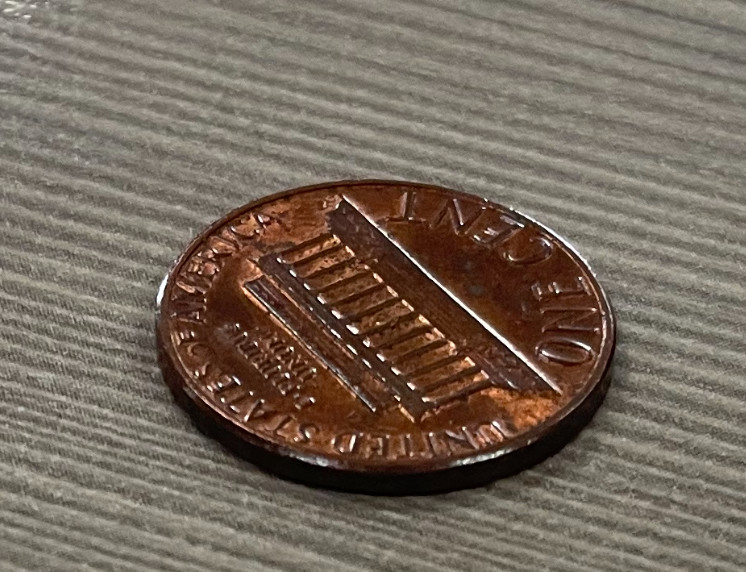
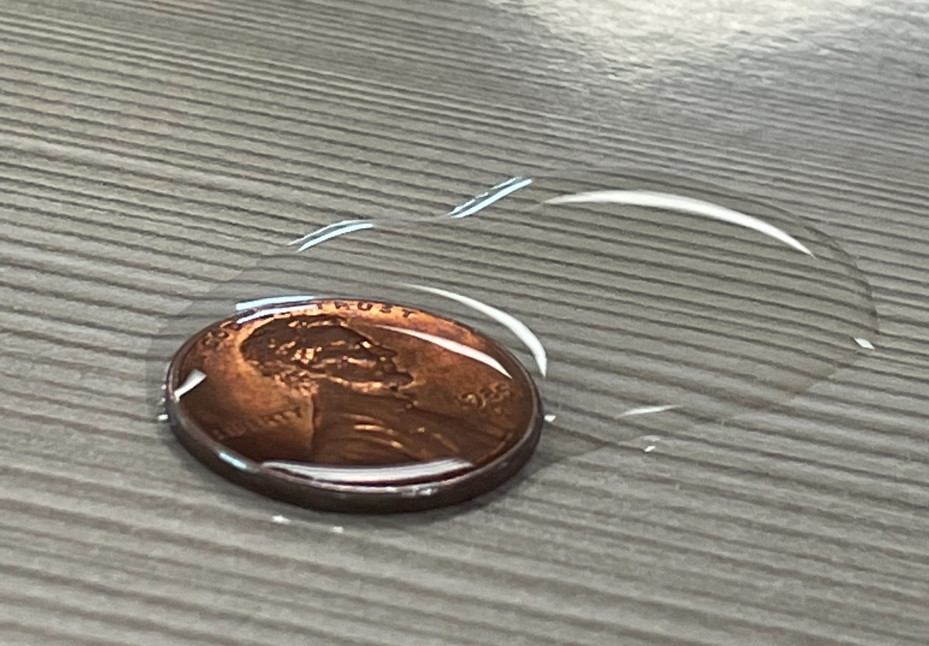
3.Now they will use a pipette to collect water. Then they will try and squeeze out as many drops of water as they can on the clean, dry penny before it spills over. Make sure the pipette does not touch the water drop or the penny as they continue to carefully add more drops to the growing droplet. See the picture below:
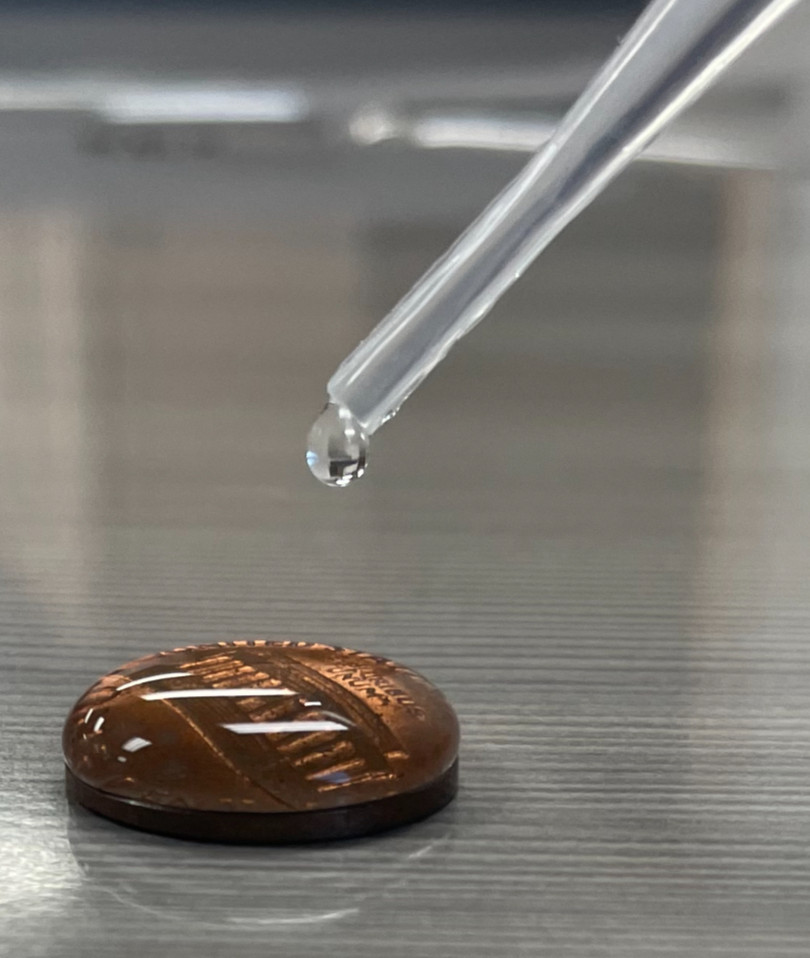
4. Students will count how many drops they were able to get on one penny and record this in their science notebook.
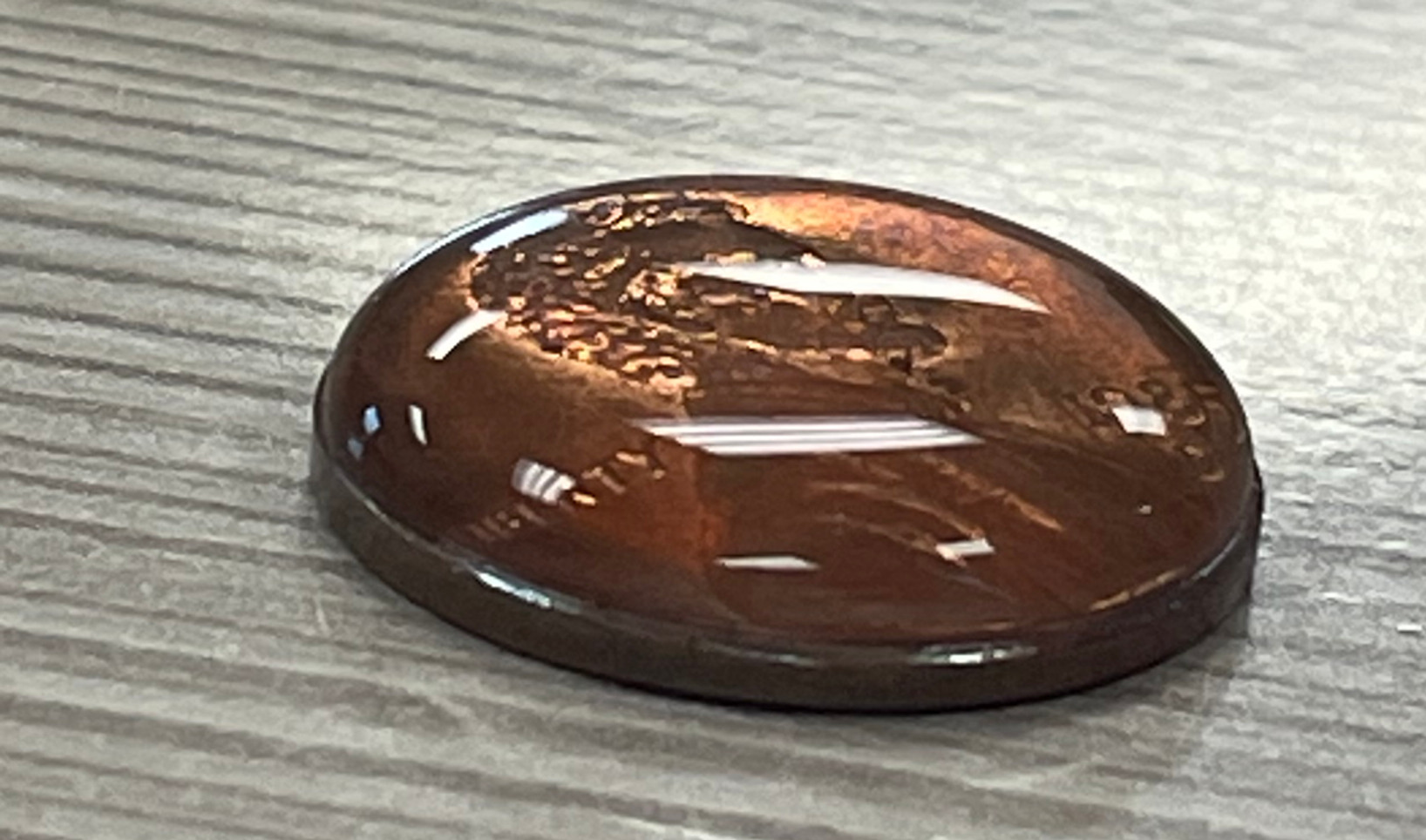
5.They will repeat this step two more times to see if they get the same number of drops or even more. You can even have them draw a picture of what they observe before the water drop gets too big and spills over.
5. Now let students repeat steps 1-4 using alcohol instead of water. They will note any
differences they observe in their notebooks.
6. Have students use paper towels to clean up their area of any spills.
What's Going On?
Cohesion is seen as the drops of water stick together to form one big drop, resulting in one big drop of water before it spills over. Cohesion is the attraction of water molecules to itself. Yes, water molecules love other water molecules. Cohesion creates surface tension because the attraction of water molecules to other water molecules results in a net inward force which results in the tight, dome-shape top of the water drop's surface.
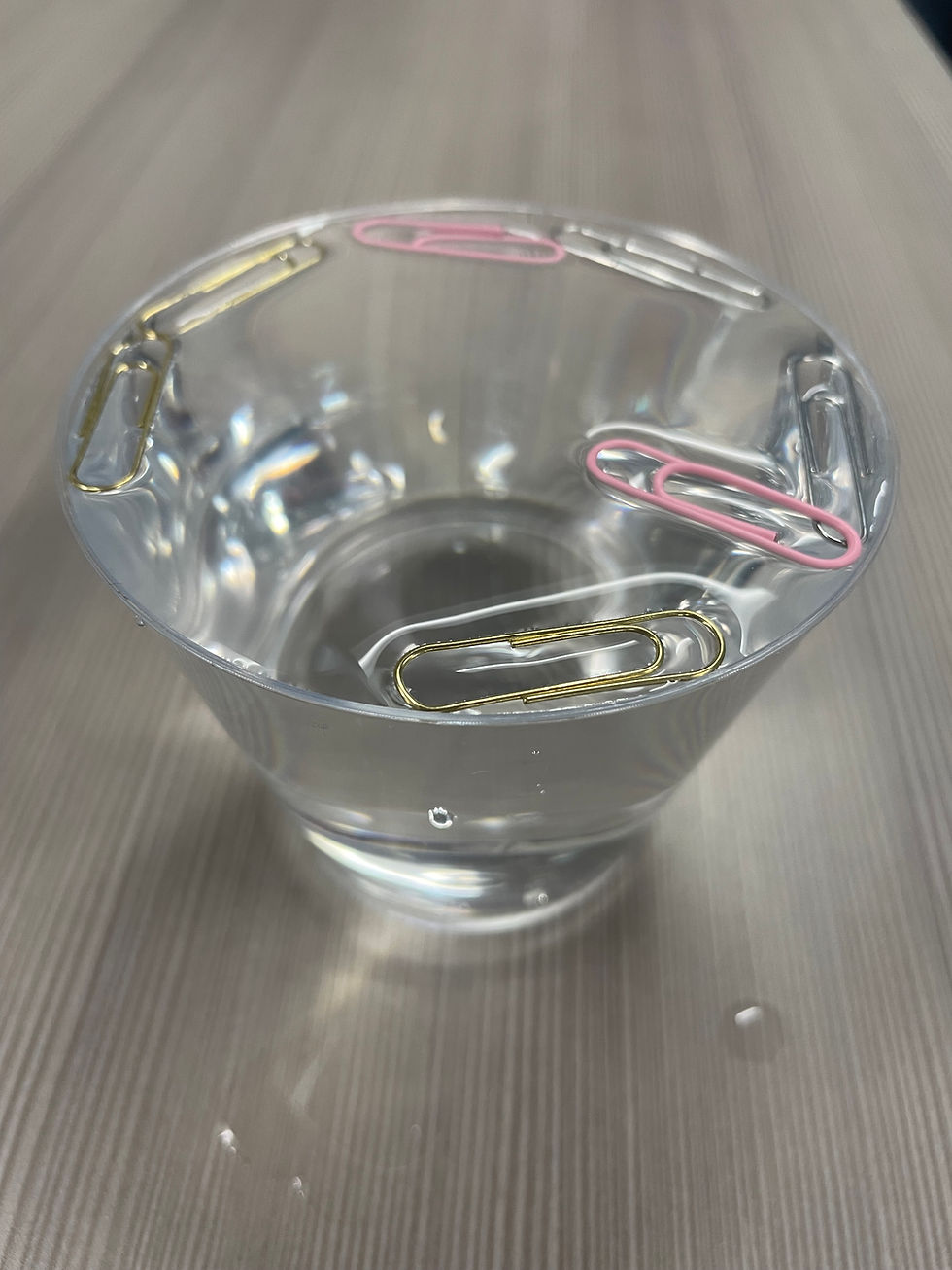
Surface tension is the elastic quality of water's surface, that makes it act like a "stretchy skin" that can resist an external force. Surface tension was observed until the big water droplet finally spilled over, off the penny. The water molecules in a drop of water are pulled in all directions by other water molecules, while the water molecules at the surface are being pulled sideways and downward by the water molecules beneath them. This creates a tighter bond between the water molecules at the surface, resulting in a tight layer of water. This is why a water strider spider, and other insects are able to walk on water.
There is another water property occurring in the penny lab, it is adhesion. Adhesion is when water molecules stick to something else, other than water. The water droplet sticking to the surface of the penny is adhesion.
What about the alcohol in the lab? Alcohol molecules are less cohesive than water and have lower surface tension than water. This is why you probably did not get as many drops of alcohol on a penny, as you did water.
Students can answer these questions/sentences in their notebooks after the penny lab:
1.Based on my observations, water sticks to itself _________________ than rubbing alcohol.
(More or less)
2.This means that water molecules are _________________ cohesive than alcohol molecules.
(More or less)
3.Which properties of water were involved when a large drop of water formed on the penny?
Explain.
4.Draw and label a picture of what your water drops on the penny looked like before it spilled
over.
5.Were you able to get more water drops on a penny, or more alcohol drops?
6.Water molecules sticking to other water molecules is called ___________________.
7.Water molecules sticking to something else, like the penny in this lab, is called ______________.
8.The surface of the large water drop is held together by the attraction between water molecules. This creates the dome shape top you see. This is called __________________ tension.
8.What do you think will happen if you use soapy water instead of plain water? Explain.
Extension:
*Try using other solutions, like vegetable oil, sugary juice, and see how many drops you can get
on one penny.