Clay Lung Models
- The Biology Buzz Place

- Jun 11
- 2 min read
Updated: Jul 25
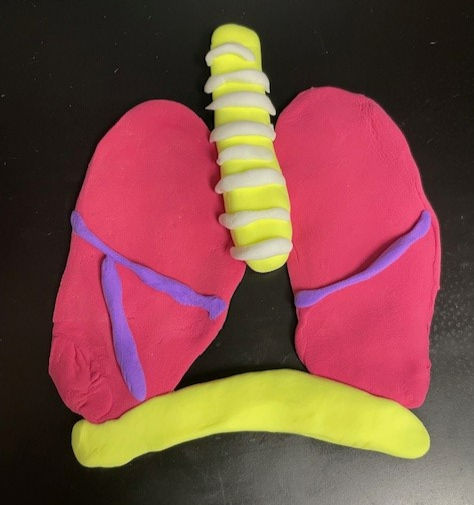
I brought you the clay blood vessels and heart model idea to bring into your classes (my personal favorites!). Then the neuron clay model, integumentary model, and now I want to share this lung clay model with you.
I will say it again and again, most students will enjoy doing these clay lessons, as it gives them some freedom of art expression and it is kind of stress-relieving to roll and shape air dry clay in their hands. It’s a great addition to any class, but especially for science classes.
The clay I use if an air dry clay, but whichever clay you buy for this, just make sure it is easy to shape, not messy, and dries within hours. You don't want a sticky kind.
Here is how to make clay lung models:
Step 1
Roll a small amount of a clay into the shape of the trachea as seen below. This one is yellow.

Step 2
Shape the two lungs out of a pink or reddish clay. Make the left lung slightly smaller than the right lung (Remember, the left side is the one on the right when looking at it directly). In the human body the left lung is a little smaller than the right lung so as to make room for the heart.
Now connect the lungs to the trachea.

Step 3
Now add small, thin strips of a different color clay to go across the trachea to represent the cartilage rings that surround the trachea.


Step 4
Now you are ready to add the dome-shaped diaphragm that sits underneath the lungs. I suggest using a color different than what you used for the lungs.

Step 5
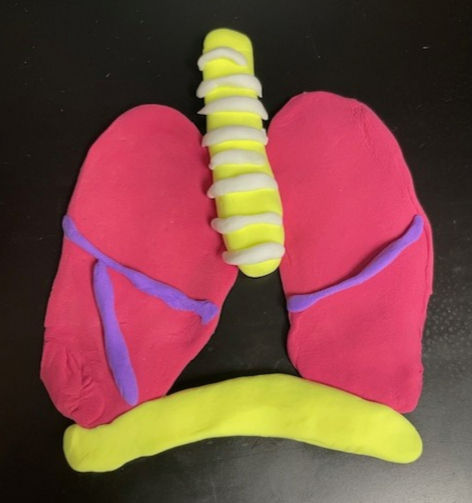
Now for the lobes. For this, use any color of clay that stands out to you. Roll thin strips of this clay and lay it on the lungs as shown in the picture below to divide the right lungs into three lobes and the left lung into two lobes.
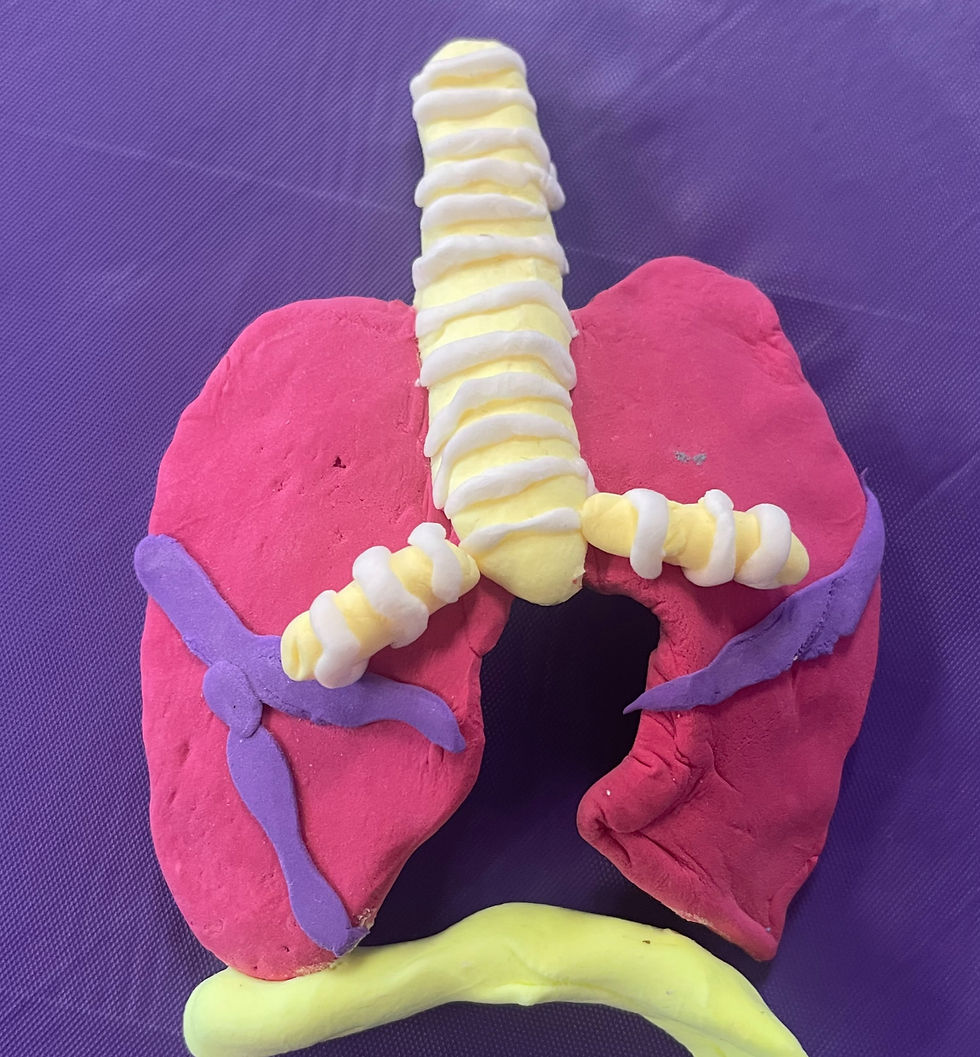
*If you want to your students to include the right and left bronchus in their clay model, you can. See this other model below. Like the trachea, the bronchi have rings of cartilage which is why they have white rings around them, too in this picture.
Extension Activity
You can make a tar-coated lung model to represent smoker's lungs, just make the lungs dark grey or black instead of a healthy pink color. In the model below a student used grey. This model would be great to include in a health science class where tobacco education is taught.

This respiratory system thinking bingo game in my store is another fun way to learn about the respiratory system and tobacco facts.


